Why is my water bill suddenly so high in Federal Way
A sudden spike in your Federal Way water bill almost always traces back to a hidden leak. Here's how to find it, what it costs to fix, and when to call a pro.
A sudden jump in your Federal Way water bill is almost always a hidden leak - most often in a toilet flapper, an irrigation line, or a slab pipe under the foundation. If your usage doubled but nothing in the house changed, the water is going somewhere you can't see, and it will keep costing you until it's found.
We've traced hundreds of these calls across Federal Way, and the pattern is consistent: the bill climbs for one or two cycles before the homeowner notices, then a wet spot or a soft floor finally gives it away. This post walks through how to confirm a leak in 15 minutes, the six causes we see most in Federal Way, what detection and repair cost in 2026, and when it's time to stop guessing and call someone.
The short answer: a hidden leak is the most likely cause
Why is my water bill so high Federal Way WA homeowners ask us this every week, and the honest answer is that 8 out of 10 spikes we investigate trace back to a leak - not a rate increase, not a meter error, not a neighbor tapping your line. Lakehaven Water and Sewer District and Tacoma Public Utilities bill by the hundred cubic feet (CCF), and one CCF equals 748 gallons. A single running toilet flapper wastes 200 gallons a day, which is roughly 8 CCF a month - about $60 to $90 on a typical Federal Way residential tier.
Water leak detection is the process of finding where water is escaping from a pressurized line, drain, or fixture using acoustic listening equipment, thermal imaging, and pressure testing - it's what you need when the meter spins but no faucet is on. Most homeowners can confirm a leak exists with a meter test, but pinpointing it under a slab or in a yard takes tools and experience.
Before you assume the worst, rule out the easy stuff. Rate changes happen, but they show up as a 5-15% bump, not a doubling. A billing error is possible but rare. If your usage graph looks like a cliff, it's water leaving the system.
How to check your meter in 15 minutes
You can confirm whether you have an active leak in about 15 minutes with nothing but your water meter and a flashlight. Here's the sequence we walk homeowners through on the phone:
- Shut off every fixture in the house - faucets, dishwasher, washing machine, ice maker, irrigation controller.
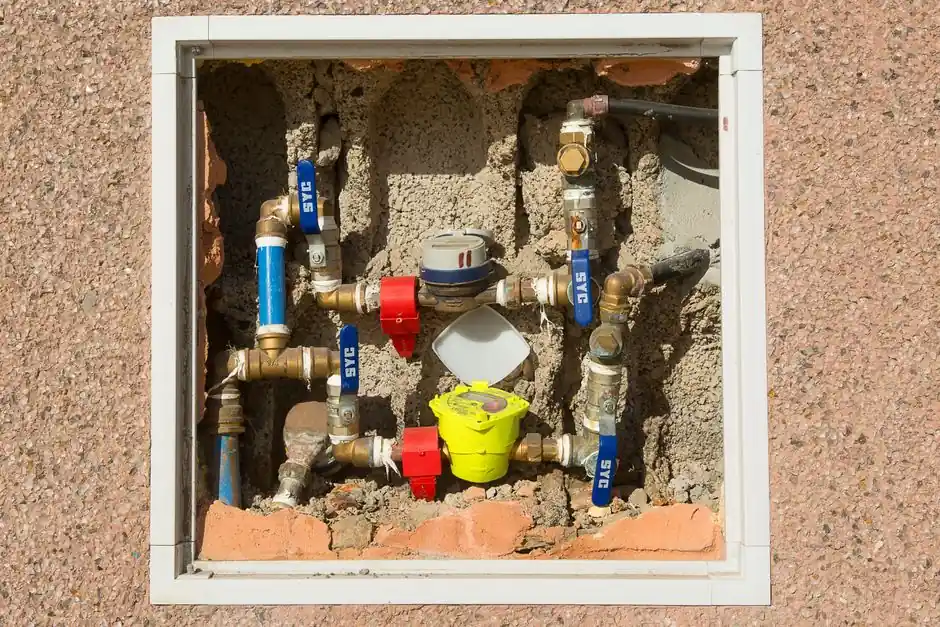
- Find your meter box, usually near the curb or in a utility easement. Lift the lid carefully; there may be spiders.
- Watch the leak indicator - the small triangle or dial on the face. If it's spinning, water is moving.
- Wait 10 minutes and read the main dial again. If the number changed, you have a leak.
- Shut off the main valve inside the house and recheck. If the meter stops, the leak is inside. If it keeps spinning, it's between the meter and the house - an underground line.
That last step is the one most people skip, and it's the most useful. It splits the problem into two very different repair jobs with very different price tags.
If the meter test is inconclusive - sometimes a slow slab leak won't move the dial fast enough to see in 10 minutes - a professional water leak detection Federal Way WA inspection with acoustic equipment will find it in under an hour.
Common causes of high water bills in Federal Way WA
The six causes below account for nearly every high water bill Federal Way Washington homeowners call us about. We rank them by how often we find them, not by how dramatic they are.
1. A running toilet flapper
This is the number one culprit and the cheapest to fix. A worn flapper lets water trickle from the tank into the bowl 24/7. You won't hear it. You won't see it. You'll just get a bill that's $40 to $120 higher. A $12 flapper and 10 minutes fixes it.
2. A slab leak under the foundation
Federal Way has thousands of homes built between 1965 and 1995 with copper supply lines running through the slab. Copper pinholes after 30-40 years, especially in areas with aggressive soil. A slab leak can waste 10,000 to 30,000 gallons a month and warm spots on the floor are the classic tell. This is where slab leak detection Federal Way WA earns its keep - we use acoustic listening and thermal imaging to mark the exact spot before anyone cuts concrete.
3. An underground water line leak
The line between your meter and the house is your responsibility, not the utility's. A pinhole in that line can run for months before the ground above it shows any sign. If your meter spins with the house main shut off, this is your problem. underground water line leak detection Federal Way WA uses ground microphones and tracer gas to find the break without digging up the whole yard.
4. Irrigation and sprinkler leaks
Federal Way's irrigation season runs roughly April through October, and a broken head or a cracked lateral line can dump 500 gallons a night. If your bill spikes in summer and drops in November, look at the sprinkler system first. irrigation leak detection Federal Way WA isolates the zone in about 30 minutes.
5. A failed pressure-reducing valve
Federal Way sits in a hilly service area, and static pressure above 80 PSI stresses every fixture and supply line in the house. A failed PRV can push pressure to 120 PSI or higher, which doesn't leak by itself but accelerates every other leak you have. A $250 to $400 replacement is cheap insurance.
6. A leaking water heater T&P valve or supply line
Less common but easy to spot. Look for water staining at the base of the tank or corrosion on the flex connectors. If the tank itself is leaking, it's a replacement, not a repair.
Why Federal Way homes leak more than you'd expect
Federal Way's housing stock and soil make it a leak-prone city, and that's not a sales pitch - it's geology and building code history. Three factors stand out:
- Age of the copper. The bulk of Federal Way's single-family homes went up between 1965 and 1995. Copper supply lines from that era are now 30 to 60 years old and past their design life.
- Soil movement. The glacial till and clay soils common in the Twin Lakes and Dash Point areas expand and contract with our wet-dry cycle, stressing buried lines and slab penetrations.
- Water pressure. Federal Way's elevation changes mean some neighborhoods see 90-110 PSI at the meter. That's well above the 60 PSI most fixtures are rated for.
We see the same pattern in older neighborhoods across leak detection in Twin Lakes, where 1970s and 80s construction dominates and slab leaks are a weekly call. Over in the denser, older blocks near Pacific Highway, leak detection in Downtown Federal Way often turns up shared-wall supply issues in mid-century buildings.
If you own a commercial property - a restaurant, a laundromat, a small retail strip - the math is worse because you're on a commercial tier. commercial leak detection Federal Way WA is a different scope than residential work, and it usually pays for itself in one billing cycle.
What leak detection costs in Federal Way in 2026
Typical 2026 pricing in this area runs $250 to $450 for a residential leak detection visit, and $400 to $800 for slab or underground work that requires acoustic and thermal equipment. Repair is separate and depends entirely on what we find:
- Toilet flapper replacement: $15-$40 in parts, DIY-friendly.
- Slab leak repair (spot repair, reroute, or repipe): $1,200-$4,500 depending on access and how much concrete has to come up.
- Underground line repair: $800-$2,500, more if the line runs under a driveway or mature landscaping.
- Irrigation zone repair: $150-$600.
- Pressure-reducing valve replacement: $250-$400 installed.
Most homeowners we work with get the detection fee credited toward the repair if they hire us to fix it. That's the honest way to price this work - you shouldn't pay twice for the same problem.
One more number worth knowing: Lakehaven and TPU both have leak adjustment policies that can reduce a spike bill once, if you can show a repair receipt. Ask about it. It's not automatic and it's not advertised.
What to watch out for
The most expensive mistake we see is homeowners waiting two or three billing cycles before acting. A $300 slab leak in March becomes a $4,000 repair and a $600 water bill by July. Water doesn't stop on its own.
Other traps:
- Assuming it's the utility's problem. Everything past the meter is yours. The utility's responsibility ends at the meter box.
- Hiring a leak detection company that also does the repair without separating the two. Detection and repair are different skills. Ask what equipment they use - acoustic listening, thermal imaging, tracer gas. If the answer is "we just look around," keep calling.
- Cutting concrete before the leak is pinpointed. We've seen homeowners jackhammer a 4x4 section of slab and miss the leak by three feet. Mark it first.
- Ignoring a small drip. A drip at 1 gallon per hour is 720 gallons a month. That's a full CCF.
- Not checking the irrigation shutoff in winter. A zone left pressurized through a freeze can split a lateral and run undetected until spring.
When to call a professional
Call a professional when the meter spins with the house main shut off, when you see warm spots or unexplained moisture on a slab floor, when your bill doubles and the toilet test comes back clean, or when you've spent more than an hour looking and haven't found it. Those four situations are the ones where DIY guessing gets expensive.
Federal Way Leak Detection Experts handles residential and commercial leak detection across the city - slab, underground, irrigation, and pressure diagnostics. We find the leak, tell you what it will cost to fix, and get it done. No guesswork, no unnecessary concrete cutting, no surprise line items.
Get help with leak detection in Federal Way
If your bill doubled and the meter won't stop spinning, we can find the leak, mark it, and fix it - usually the same week you call. We work across Federal Way, from Twin Lakes to Downtown and everywhere in between.
Call Federal Way Leak Detection Experts at (253) 294-9862 and we'll get a technician out to trace it.